
How Much Chicken Per Person for a Party?
The fast answer
As an Amazon Associate, MeatLogic earns from qualifying purchases.
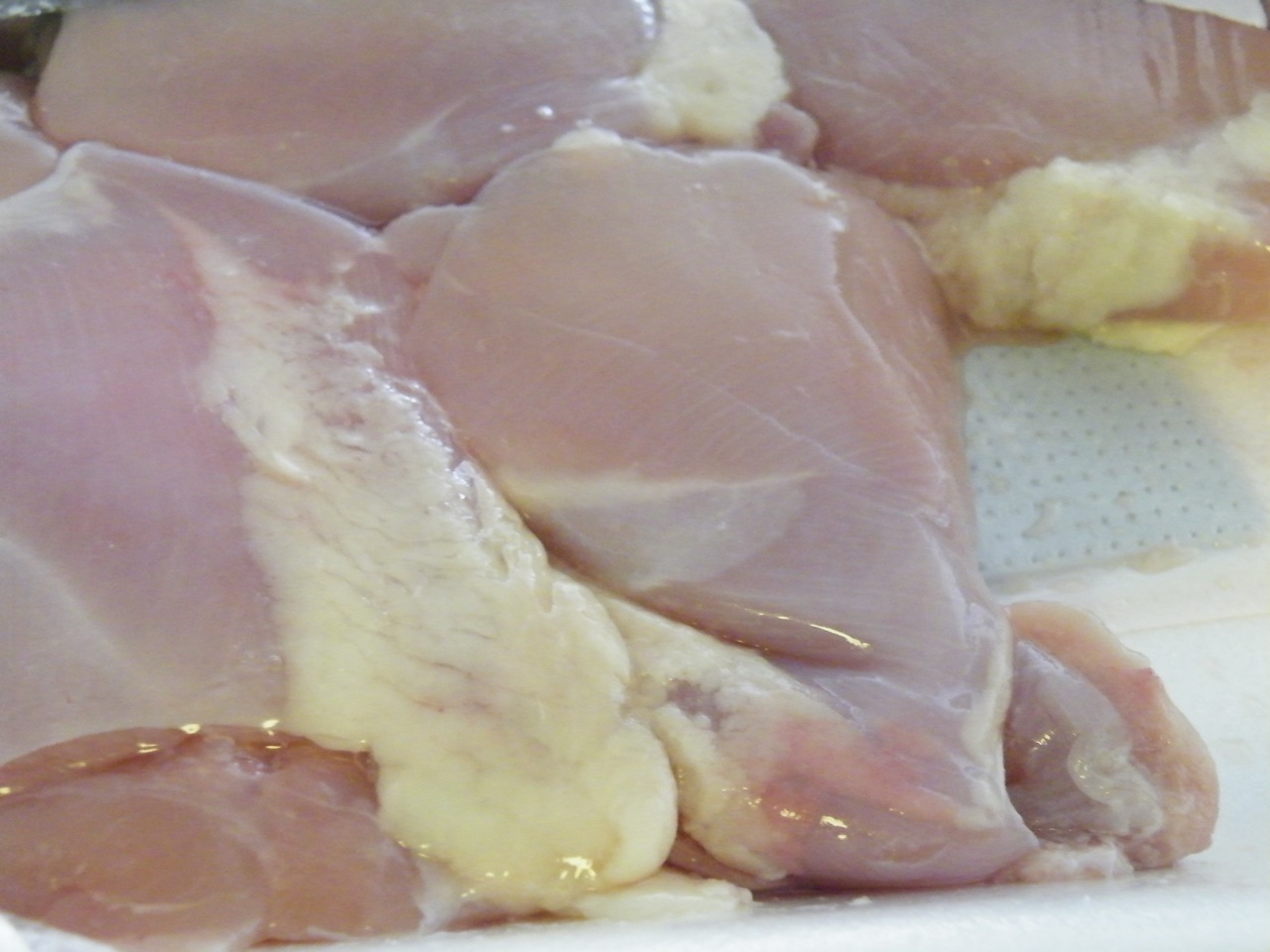
Plan 6 ounces of cooked boneless chicken per adult when chicken is the main protein with sides. Buy about 8 ounces of raw boneless chicken per adult to allow for cooking loss. For bone-in chicken, buy roughly 12 ounces raw per adult, because bones, skin, trimming, and moisture loss reduce the edible cooked yield.
Use 4 cooked ounces per person for tacos, sandwiches, pasta, or a buffet with another substantial protein. Use 8 cooked ounces for a meat-centered meal with light sides or a crowd of big eaters. Add a 10 percent buffer when the guest list, appetite, or piece size is uncertain.
Those are planning assumptions, not serving mandates. The MeatLogic portion calculator lets you change guest count, appetite, sides, and leftovers instead of forcing every party into one rule.
Chicken quantity table
This table uses the dependable middle case: chicken is the main protein, several sides are available, and you want 6 cooked ounces per adult. Raw boneless quantity assumes about 75 percent cooked yield. Raw bone-in quantity uses a more conservative 50 percent edible cooked yield.
| Guests | Cooked boneless chicken | Raw boneless chicken | Raw bone-in chicken | Add 10% buffer |
|---|---|---|---|---|
| 10 | 3.75 lb | 5 lb | 7.5 lb | 5.5 lb boneless or 8.25 lb bone-in |
| 20 | 7.5 lb | 10 lb | 15 lb | 11 lb boneless or 16.5 lb bone-in |
| 30 | 11.25 lb | 15 lb | 22.5 lb | 16.5 lb boneless or 24.75 lb bone-in |
| 40 | 15 lb | 20 lb | 30 lb | 22 lb boneless or 33 lb bone-in |
| 50 | 18.75 lb | 25 lb | 37.5 lb | 27.5 lb boneless or 41.25 lb bone-in |
| 75 | 28.13 lb | 37.5 lb | 56.25 lb | 41.25 lb boneless or 61.88 lb bone-in |
| 100 | 37.5 lb | 50 lb | 75 lb | 55 lb boneless or 82.5 lb bone-in |
Round purchasing quantities up to the next package, not down to the last ounce. Real chicken pieces vary, guests do not portion with laboratory precision, and one dropped tray can erase a mathematically perfect plan.
The formula behind the table
Start with cooked food on the plate, then work backward to raw purchase weight.
Guests × cooked ounces per guest = total cooked ounces
Divide by 16 to convert ounces to pounds. Then divide by the expected yield.
For 20 adults at 6 cooked ounces each:
- 20 × 6 = 120 cooked ounces
- 120 ÷ 16 = 7.5 cooked pounds
- 7.5 ÷ 0.75 = 10 raw pounds of boneless chicken
For bone-in chicken at a conservative 50 percent edible cooked yield:
- 7.5 ÷ 0.50 = 15 raw pounds
A digital kitchen scale is useful when you are testing a new recipe for a future event. Weigh the raw batch, cook it exactly as planned, remove bones if applicable, and weigh the edible cooked result. Divide cooked weight by raw weight to learn your own yield. That one test is more accurate than a generic percentage because it includes your cut, trim, cooker, and finish.
Choose the portion for your menu
4 cooked ounces per person
Use this lighter amount when chicken is chopped or pulled into tacos, sliders, rice bowls, salads, pasta, or casseroles. Tortillas, bread, rice, beans, vegetables, and sauce make the serving feel complete. It also works when another main protein is equally prominent.
At this level, buy about 5 1/3 raw boneless ounces per guest before adding your buffer. For 30 guests, that is about 10 raw boneless pounds, then 11 pounds after a 10 percent cushion.
6 cooked ounces per person
This is the best default for grilled breasts, smoked thighs, or sliced chicken served as the clear main course with two or three sides. Buy 8 raw boneless ounces or about 12 raw bone-in ounces per adult.
8 cooked ounces per person
Use the generous amount when the meal centers on meat, the sides are light, the event runs for several hours, or the group predictably eats large portions. Buy about 10 2/3 raw boneless ounces per guest, then add a modest buffer if leftovers are welcome.
Do not automatically stack an 8-ounce serving and a 15 percent buffer. That combination can create a mountain of leftovers. Choose a portion assumption first, then use the buffer only for uncertainty.
Piece counts for thighs, drumsticks, and breasts
Buying by the piece is easier for a buffet, but piece size varies. USDA FSIS chicken guidance lists approximate raw sizes of 4 to 8 ounces for a bone-in breast half, leg, or thigh, about 4 ounces for a drumstick, and 2 to 3 ounces for a wing or wingette. Count pieces only after you know the package size.
Bone-in thighs
Plan two small thighs or one very large thigh per adult when thighs are the only meat. For a mixed-piece buffet, count one thigh plus access to another piece. Thighs are forgiving, hold well, and stay juicy during service, which makes them one of the safest choices for a crowd.
Drumsticks
Plan two average drumsticks per adult and one per young child. If the pieces are small or the party runs through a meal period, prepare a few extras. Drumsticks are easy to portion but contain less meat than their package weight suggests.
Bone-in breast halves
Plan one average breast half per adult, but inspect the package. Modern breast halves can be large enough for two moderate servings. For a controlled buffet, slice the cooked breasts across the grain and let guests take several slices rather than one whole piece.
Leg quarters
Plan one leg quarter per adult. A quarter includes the thigh and drumstick, so it is a substantial single serving. Smaller guests may split one, while big eaters may want another piece. Our smoked chicken leg quarters guide covers the cooking method.
Wings
Wings are a special case because people eat them by count, not cooked ounces. As an appetizer, plan four to six whole wings per adult, or eight to twelve separated flats and drumettes. As the main food at a wing party, plan eight to twelve whole wings per adult, with more for a long game-day event. If several appetizers are present, use the lower end.
Whole chickens for a crowd
A whole bird includes bones, skin, cartilage, and parts that guests value differently. For a main course with sides, one 4- to 5-pound chicken usually serves four adults comfortably. Buy one bird per three adults for generous portions or leftovers, and one per five adults when the chicken is pulled into a mixed dish.
Several medium birds are easier to cook evenly than one enormous batch packed tightly into a cooker. They also give you more legs and wings, which matters if your guests prefer dark meat. Our crispy smoked chicken guide explains how to avoid the soft skin that often appears when whole birds are smoked too cool.
For a mixed crowd of 20 adults, five average whole chickens is a practical baseline. Six gives you a useful cushion and a better chance of satisfying dark-meat fans. If you will carve before service, separate breast, thigh, drumstick, and wing pieces instead of presenting five intact birds to a buffet line.
Boneless breast versus boneless thigh
Boneless breasts give clean slices and high edible yield, but they are less tolerant of extended hot holding. Boneless thighs vary more in shape and fat, yet remain tender through transport and buffet service. A half-and-half batch serves the widest range of preferences.
If you mix cuts, do not assume they finish together. Cook breasts and thighs on separate trays or zones, then verify each piece. USDA FSIS says all chicken must reach 165°F, which matches the MeatLogic meat temperature chart. Measure the thickest part without touching bone.
The Hey Grill Hey video below demonstrates a scalable smoked-thigh method, including seasoning, cooker arrangement, and sauce. Scale the ingredient weights to your guest count, preserve space between pieces, and use the 165°F safe minimum rather than relying on elapsed time.
Adjust for children and mixed appetites
A useful planning model is to count each young child as half an adult portion and each teen as one adult. That means 10 adults, 6 young children, and 4 teens equal 17 adult portions:
- 10 adult portions
- 3 child-equivalent portions
- 4 teen portions
- 17 total adult equivalents
At the 6-ounce cooked baseline, that group needs 102 cooked ounces, or 6.38 cooked pounds. Divide by 0.75 for about 8.5 raw boneless pounds, then round up to 9.5 pounds with a modest buffer.
Know your group. A team banquet after a game can out-eat the formula. A midday shower with salads, rolls, and dessert may not. The portion calculator is designed for exactly these appetite and side-dish adjustments.
How sides change the number
The strongest side dishes reduce chicken demand because they contribute protein, fat, or bulk. Baked beans, macaroni and cheese, potato salad, cornbread, rice, and hearty slaw all make a 4- to 6-ounce serving feel complete.
Light sides such as green salad, grilled vegetables, pickles, and fruit do less to reduce meat demand. They balance the plate, but they do not replace the satiety of a substantial starch or bean dish.
Use this quick framework:
| Menu | Cooked chicken per adult |
|---|---|
| Tacos, sliders, pasta, or rice bowls | 4 oz |
| Main chicken plus 2 to 3 substantial sides | 6 oz |
| Chicken plus light sides | 7 to 8 oz |
| Two main proteins plus substantial sides | 3 to 4 oz chicken |
| Meat-centered event with few sides | 8 oz |
Build a production plan, not just a shopping list
Crowd cooking fails when all the chicken is technically purchased but cannot fit, cook, hold, or serve safely. Measure the grate and run a small layout test before the event. Pieces should not be pressed edge to edge because airflow is part of cooking.
Use multiple batches if needed. Rimmed sheet pans keep raw and cooked pieces organized, but dedicate separate pans and utensils to each. Label pans by cut and batch. Never put cooked chicken back on a surface that held it raw.
A simple production sequence is:
- Trim and season the first batch while the cooker preheats.
- Load similar pieces together and leave room for airflow.
- Track the thickest representative pieces with leave-in probes.
- Verify every piece with an instant-read thermometer.
- Move finished chicken to a clean hot-holding setup.
- Load the next batch without mixing raw and cooked tools.
- Record actual yield and leftovers for the next event.

Cook and hold chicken safely
Chicken for a crowd has more opportunities for cross-contamination and temperature drift than a family dinner. Keep raw chicken at 40°F or colder until it goes into the cooker. Wash hands after handling it, and use separate cutting boards, trays, tongs, and towels for raw and cooked food.
Every breast, thigh, drumstick, wing, and whole bird must reach 165°F according to USDA FSIS. Check several pieces from every cooker zone. A leave-in probe tells you about one piece; it cannot certify the tray.
After cooking, keep hot chicken at 140°F or warmer. Chafing dishes, warming trays, or a monitored warm oven can hold food safely. Add chicken to the buffet in smaller trays so the entire batch does not sit exposed while guests move through the line.
Perishable food should not remain at room temperature longer than two hours, or one hour when the outdoor temperature is above 90°F. Refrigerate leftovers promptly in shallow containers. Reheat leftovers to 165°F.
Keep the chicken juicy during service
Food safety and quality are separate problems. A safe hot hold can still dry lean breast meat if it continues for hours.
Cook thighs for the earliest batch because they tolerate holding. Schedule breasts closer to service. Hold whole pieces when possible and slice shortly before the line opens. More cut surface means faster moisture loss.
Cover pans loosely enough to retain heat without trapping so much steam that grilled skin turns soft. For sauced pulled chicken, a covered pan works well. For crisp skin, use a dry, ventilated hold and replenish smaller trays frequently.
An insulated food carrier is useful for transport, but insulation is not an active heater. Preheat the carrier, load properly hot food, minimize opening, and verify that the chicken remains at or above 140°F.
What to do with the 10 percent buffer
Do not cook every extra piece hours before the meal. Hold a small raw backup batch under refrigeration if your setup lets you cook it quickly and safely. For a fixed service time, cook the buffer but keep it in a separate labeled pan. Open it only if the main supply runs low.
If the backup is untouched, cool it promptly for planned leftovers. That is better than mixing every piece into the first buffet tray and letting the entire surplus sit through service.
For packaged events, consider portioning by sandwich, taco, or plate. Controlled serving eliminates the first guests taking double portions and the final guests receiving scraps. A server at the chicken station can protect the plan without making the buffet feel restrictive.
Common planning mistakes
Buying by raw ounces but serving by cooked ounces
Chicken loses water and sometimes fat during cooking. Six raw ounces will not become six cooked ounces. Apply a yield factor before shopping.
Ignoring bones
A pound of drumsticks does not provide a pound of edible meat. Bone-in purchases need a larger raw allowance than boneless breasts or thighs.
Counting pieces without checking size
One thigh can weigh twice as much as another. Inspect the actual package and buy by total weight plus a piece-count check.
Forgetting the second protein
If brisket, sausage, or burgers share equal billing, do not plan a full chicken main-course portion as well. Allocate the total meat target across the proteins.
Packing the cooker
A grate that physically holds 60 thighs may not cook 60 thighs evenly. Leave airflow space and plan batches.
No holding strategy
Chicken finished two hours early needs monitored hot holding, not a foil-covered pan on a counter.
Final shopping checklist
- Count adults, teens, and young children as adult equivalents.
- Choose 4, 6, or 8 cooked ounces based on the menu.
- Convert cooked need to raw weight using the cut's yield.
- Check piece size before relying on piece counts.
- Add a 10 percent buffer only when uncertainty justifies it.
- Confirm cooker capacity, batch timing, and clean tray space.
- Plan a 165°F verification for every cooker zone.
- Keep service trays at 140°F or warmer.
- Prepare shallow containers for rapid leftover cooling.
For most parties, the answer is simple: buy half a pound of raw boneless chicken or three-quarters of a pound of raw bone-in chicken per adult, then adjust for the menu. The arithmetic gets you close. Matching the cut, sides, cooker capacity, and serving method is what gets everyone fed without a cooler full of unnecessary leftovers.
Related
How Many Ribs Per Person? Party Planning Guide
Plan baby backs, St. Louis ribs, spare ribs, or beef ribs for any crowd with practical per-person portions, rack math, and a leftover buffer.
How Much Pulled Pork Per Person?
Use a simple cooked-yield formula to buy enough pork shoulder for sandwiches, plates, or a buffet without running short or wasting a full roast.
How Much Meat Per Person for a BBQ? A Buying Guide
The number that catches people out is not the portion size, it is the yield. A packer brisket comes off the pit at roughly half what you paid for.